Judgement
How to choose an item on the CSSBuy spreadsheet
The catalogue is large enough that anything you want probably exists somewhere in it. That makes selection the hard part rather than discovery. Here is how to read a listing well enough to put money on it.
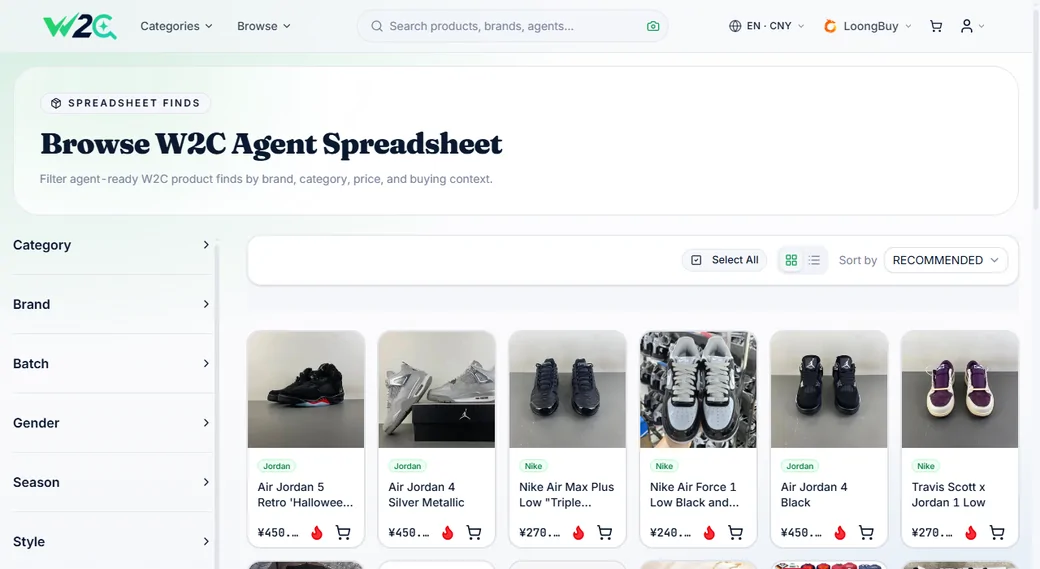
Start with the photographs
Photographs are the only evidence you get before your money is committed, so read them as evidence. What you want is variety: the item worn or in use, a close shot of whatever detail matters for that category, the label or stamp, and the packaging it ships in.
Consistency of background and lighting across a set is a good sign. It suggests one person photographed one item. A set where every image has a different background, different white balance and a different floor is usually assembled from elsewhere.
What matters varies by category. On sneakers it is the sole and the stitching. On a hoodie it is the weight of the fabric and how the hem sits. On a watch it is the dial at an angle, where printing errors become visible. On a bag it is the hardware.
Then ignore the size label
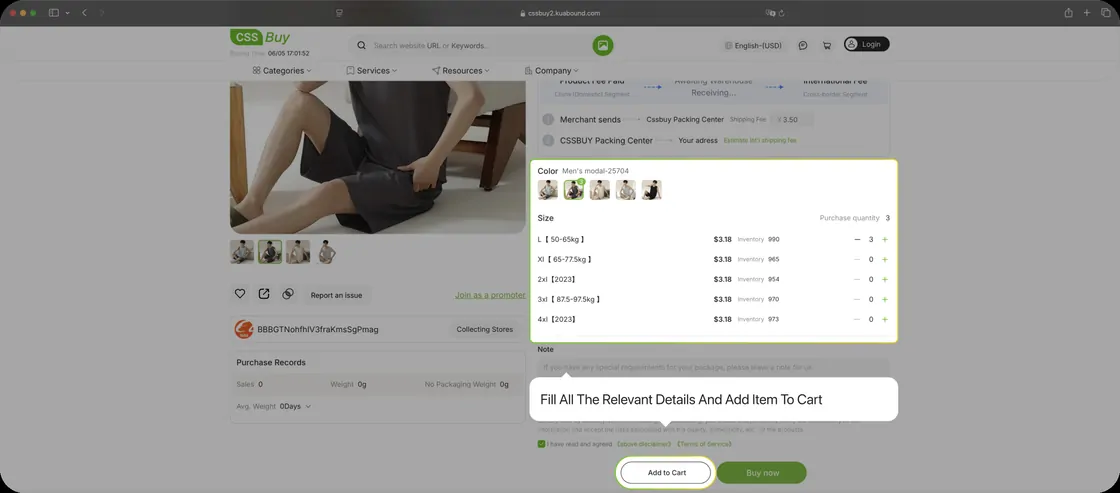
This is the most reliable way to avoid a bad order. Find the measurement table, take the numbers in centimetres, and compare them against something you already own and wear happily. Chest width, shoulder width, length, sleeve. For shoes, the insole length in centimetres, not the EU or US number.
Size letters are not standardised between Chinese sellers, and the gap between a Chinese L and a European L is often a full size. Two listings for the same item from two sellers can use different charts. The centimetres are the only thing that travels.
If a listing has no measurements at all, that is information too. Ask, or move on. There are usually several sellers carrying the same thing.
Judging the seller behind the listing
Same item, different sellers, different outcomes. Four signals worth checking, none of which take long.
How long the shop has traded
Marketplace pages show shop age and volume. A shop that has sold the same category for years has more to lose from a bad batch than one opened last month.
Buyer photographs
Reviews with photos from actual buyers are the most valuable thing on the page. They show the item under normal light, on a normal person, after normal handling.
How the listing answers questions
Sellers who respond with measurements and specifics tend to ship what they described. Sellers who answer everything with yes are telling you what you want to hear.
Minimum order quantity
Most 1688 listings carry one, set by the supplier. Finding out after payment that you have committed to ten pieces is an avoidable and expensive surprise.
Use the inspection window properly
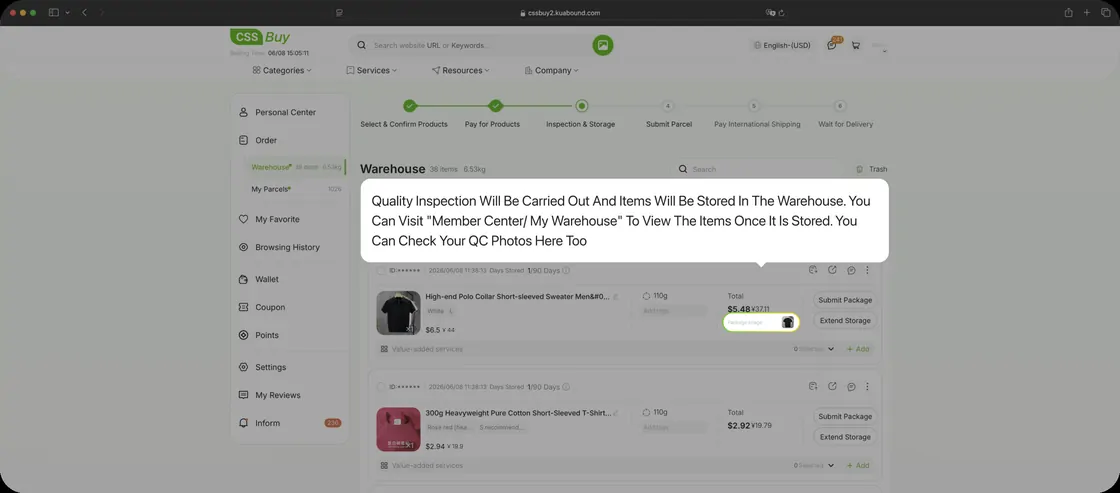
Your decision is not final at payment. It is final when the storage and return windows close. When the inspection photos arrive, look at them the same day.
If something is wrong, act immediately. A return needs three conditions to hold at once: the seller must accept returns, the item must still be within seven days of arriving at the warehouse, and you must cover the return postage. That seven day window is short, and it starts whether or not you have looked at your photos.
The people who get burned are rarely the ones who chose badly. They are the ones who let the photos sit unopened for a fortnight.
Selection questions
Three things worth settling before you pay
How many photos is enough?
Look for variety rather than volume. Twenty shots of the same angle in the same light tell you less than four that show the item worn, the sole or lining, the label, and the packaging. A listing where every photo has a different background is usually a collection of other people's images.
The size chart says my usual size. Is that enough?
No. Compare the chart's measurements in centimetres against a garment you already own and like. Size letters are not standardised between Chinese sellers, let alone between China and your country. Chest width and length in centimetres are facts. A letter is an opinion.
Should I ask the seller before ordering?
For anything expensive, yes. Contact Seller exists for this. Good questions are specific and answerable: is this the current batch, what is the actual chest measurement on a size L, is the box included. Vague questions get vague answers.
Now the failure modes
Choosing well removes most of the risk. The rest of it comes from a short list of specific mistakes, and they are worth knowing by name.